
The words “moral imperative” and “economic development” are not often featured on the same PowerPoint slide. But that’s what Laura Brunner was contemplating five years ago when she reached out to community leaders seeking advice on a big outside-the-box idea: Should the not-for-profit economic development organization she leads, The Port of Greater Cincinnati Development Authority, make a bid to buy nearly 200 houses owned by a private out-of-town real estate company that were going up for auction?
Such a move would be a major expansion in The Port’s work scope and turn it in to a landlord in about a dozen neighborhoods, most of which had experienced decades of disinvestment. But it could also rescue these houses from further decline, support and encourage home ownership, and maybe spark investment in those neighborhoods.
Hamilton County Commissioner Denise Driehaus took one of the calls. “Laura asked me, What do you think about this? It’s risky. It’s a lot of properties. It’s way more than what we’re used to. Do you think we should do this?” Driehaus says she responded with a one-word answer: “Absolutely.” Brunner got similar answers from other business and nonprofit leaders. “The theme we heard was You have a moral imperative to do this,” she says.
So The Port outbid a dozen other prospective buyers to purchase 194 homes in Hamilton County from a for-profit Los Angeles-based investment company that had gone under. It broadened the organization’s mission and garnered attention around the country, including articles in The Wall Street Journal and Forbes.
Housing had for years been a piece of The Port’s strategy to reinvest in distressed neighborhoods, but this $14.5-million purchase was a stretch, putting the public agency in the position of rehabbing neglected houses with the goal of reselling to buyers who intended to live in them. The move also called attention to the predatory trend of big real estate companies buying up single-family homes and turning them into rentals.
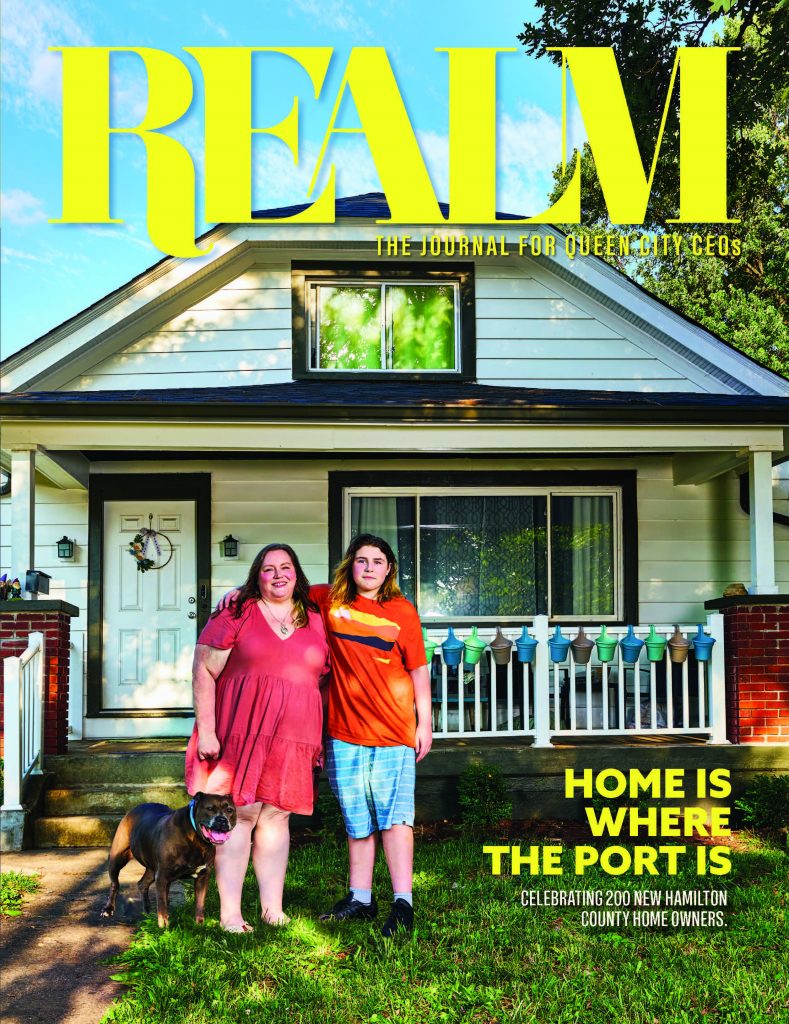
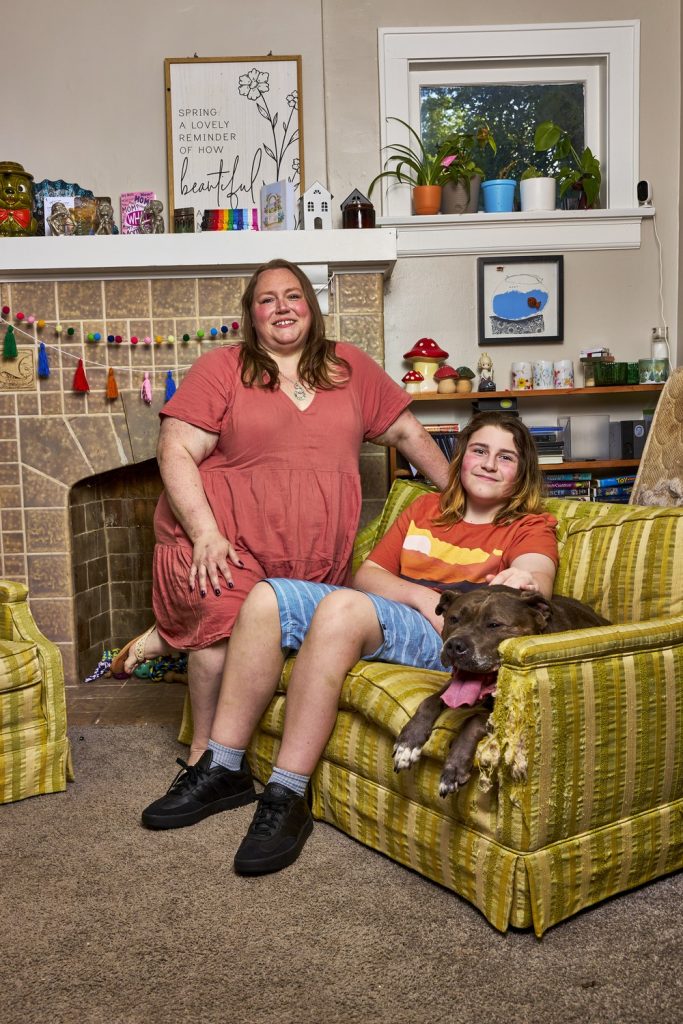
So far, Brunner’s plan appears to be working. In April, The Port announced a milestone in its long-term strategy to revive blighted and vacant properties and expand access to housing. It closed on its 200th home sale throughout Hamilton County, most of them in neighborhoods where home ownership opportunities have historically been limited.
It was the latest example of the work of a not-for-profit organization with a community mission to revive neighborhoods and jobs that also has the financial wherewithal to make significant progress toward meeting those goals.
Established in 2000 and expanded in 2008, The Port Authority has become a key player in development in Hamilton County largely through three efforts: expanding housing and home ownership, returning old industrial sites to productive use, and financing big private projects. It also manages three entities focusing on the development puzzle: Hamilton County Landbank, which acquires and repurposes vacant or abandoned properties; Homesteading and Urban Redevelopment Corp., which has a similar mission but focuses on housing; and Uptown Consortium, leading development in five neighborhoods around the University of Cincinnati. “Our goals are increasing population, increasing good-paying jobs, and increasing capital investment,” Brunner says. “Those are the three top bills.”
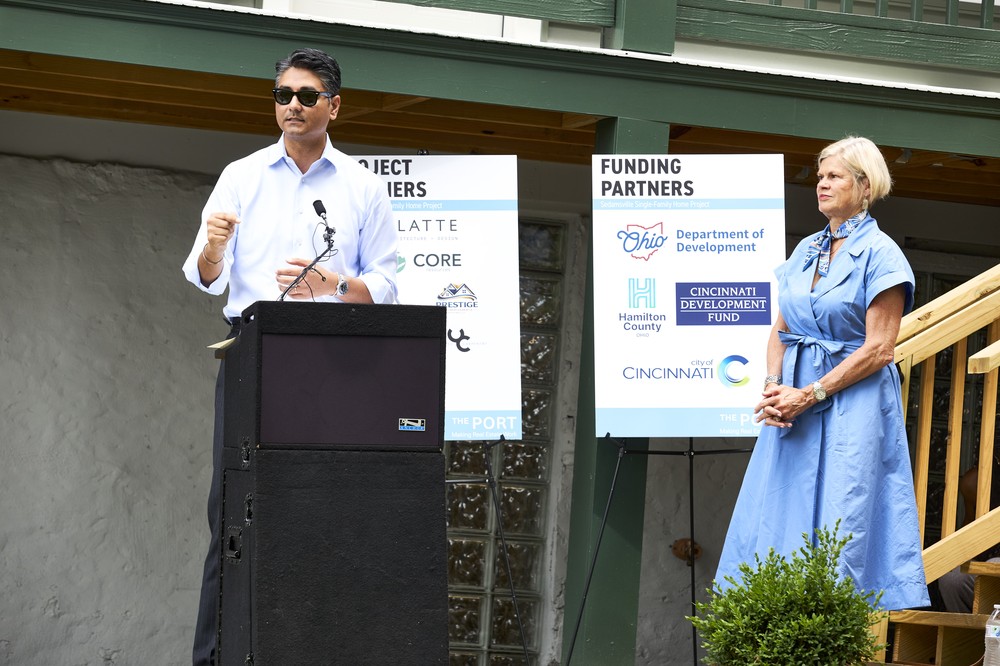
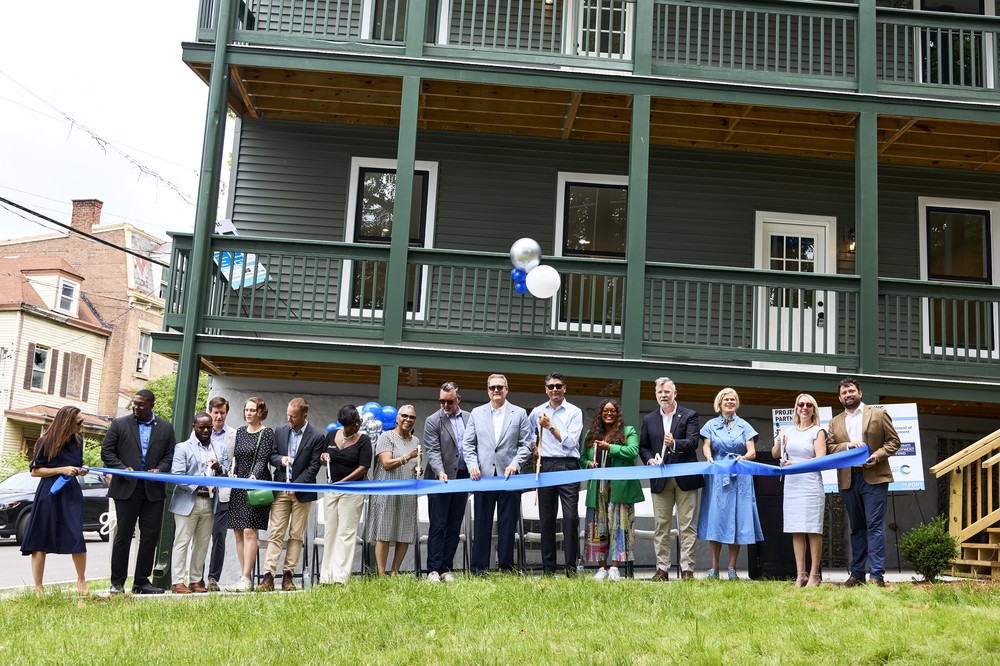
(Photo at top: Laura Brunner and Cincinnati Mayor Aftab Pureval celebrate the first newly rehabbed homes in Sedamsville on June 11. Photograph by Andrew Doench)
The Port steps into neighborhoods that have been hollowed out by foreclosures and buys old industrial sites that need cleaning up, always with the goal of sparking new investment. In some of its target neighborhoods, “There’s frankly no market demand right now for housing or for jobs in these areas,” says Mark Jeffreys, chair of Cincinnati City Council’s Housing and Growth Committee. “They can help create demand.”
Sitting between the public sector and the private sector, Brunner says The Port is focused on the long-term highest and best use of real estate, “though our goal is to turn that real estate over to the private sector and to attract private investment.”
The Port enjoys broad powers to catalyze economic development under the enabling legislation that authorized such bodies. Despite their name, port authorities in Ohio don’t necessarily have anything to do with ports, harbors, rivers, or other waterways. That’s led to some confusion about what it is the organizations actually do. “I used to think The Port had something to do with the Ohio River, and then quickly I learned Oh no, that isn’t its role,” says Driehaus.
But it could be, under The Port’s wide-ranging authority. Ohio law states that port authorities may pursue “activities that enhance, foster, aid, provide, or promote transportation, economic development, housing, recreation, education, governmental operations, culture, or research.”
Since The Port Authority was established in Hamilton County, its scope has expanded significantly, as has the agency itself. It runs on an operating budget of $13 million, owns assets worth about $160 million, and enjoys a net position (assets minus liabilities) of $60 million. When Brunner was appointed CEO in 2011, The Port employed six people; today it employs about 50.
At the beginning, its work was largely limited to cleaning up old industrial sites using state grants. Around 2008, Cincinnati and Hamilton County leaders wanted to jump-start investment and growth in some of the county’s older communities. A study called “GO Cincinnati” (for Growth Opportunities) conducted by economic and real estate experts led by The Brookings Institution identified strategies to pump up Cincinnati’s tax revenues and increase jobs by targeting six neighborhoods for revitalization.
Brookings researchers recommended creating a “catalytic development corporation,” a not-for-profit organization to assemble the land, assist in remediating contaminated sites, and be the revitalization strategy’s champion. City and county officials and business leaders realized they already had one of those in The Port Authority, which had the potential under state law to play a central role. Its scope was expanded as the city and county agreed to grant the organization “substantially all powers permitted under the Port Act.”
Brunner was appointed at a time when the agency was focused on buying and demolishing vacant, blighted properties, a problem that had increased in low-income neighborhoods following the Great Recession and foreclosure crisis of 2008-09. The authority was asked to manage the Hamilton County Landbank and through it began acquiring vacant houses. “That’s when we decided to start redeveloping homes,” says Brunner.
The Cincinnati neighborhood of Evanston was where The Port owned the highest concentration of such houses, and the agency closed its first home sale there in 2015 for $99,900. It was part of a rehabilitation of 30 houses designed to re-establish a housing market in a neighborhood that hadn’t seen a home sale in nearly a decade.
Since then, The Port has developed housing in more than 30 neighborhoods and communities in Hamilton County, many of them in the Cincinnati neighborhoods of East Price Hill, West Price Hill, and Walnut Hills in addition to Evanston. In the village of Lincoln Heights, where about half of the residents live below the poverty level, it’s built a handful of new homes, with more planned.
“Central to our work is the acknowledgment that many neighborhoods in the city of Cincinnati and Hamilton County at large do not have quality, stable housing as a foundation of the community fabric,” says Port Executive Vice President Philip Denning.
In 2022, The Port made a major purchase of homes in Sedamsville, where only about 1,000 people live and the poverty rate is double the rest of Cincinnati. One landlord controlled an inordinate number of housing units, had been sued by the city and the federal government, and was ultimately forced to sell. The Port purchased 64 properties from the owner and is in the process of rehabbing them.
In the 194-home purchase from the Los Angeles investment company and in Sedamsville, “these tenants have been abused and the properties were not being taken care of,” says Brunner. “There was a high eviction rate, and all the things you hear about bad landlords doing.”
The Port’s goals with these houses are, she says, “Be a good landlord, invest and fix up the real estate, and then have a strategic path toward home ownership, first for the renters if they’re interested and able. We want all kinds of housing, but we want home ownership as a high priority and want to rebuild neighborhoods.”
In Sedamsville, Evanston, East Price Hill, and other areas, The Port can take risks that private developers will not. The organization doesn’t have quarterly profit targets to hit, so it can be patient. In the interest of preserving affordability, it typically sells houses for less than it invested in them. Its leadership team is appointed, so they don’t face the pressure of the next election. Brunner reports to a 10-member board appointed by Cincinnati City Council and Hamilton County commissioners.
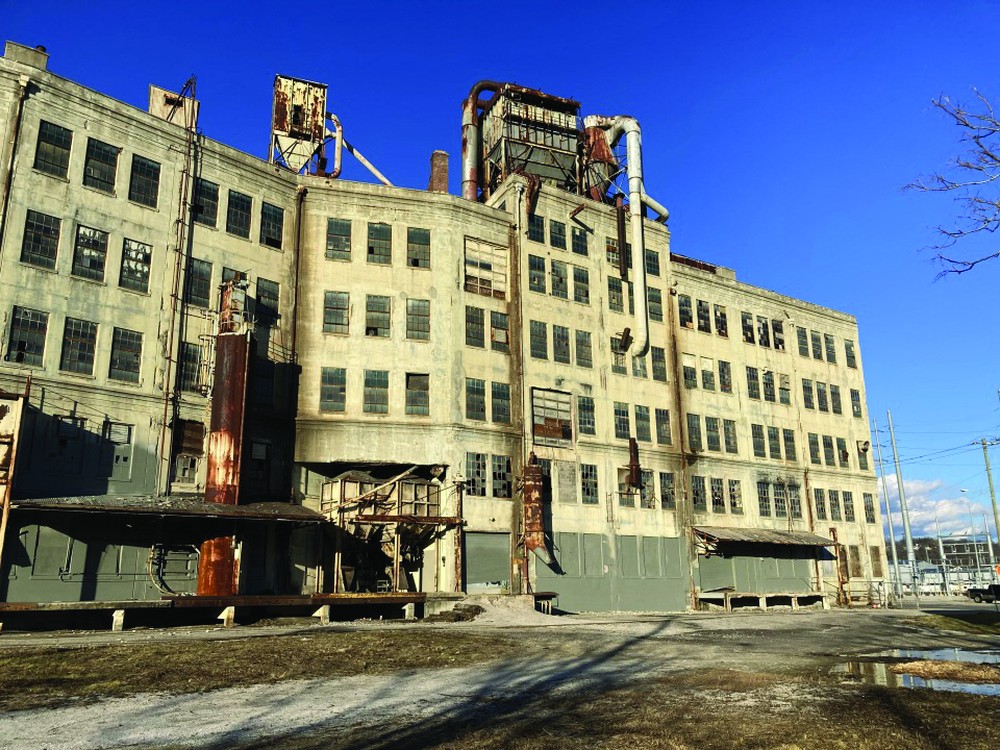
Because it can accept risks that private developers don’t, The Port can buy old industrial sites that may need environmental cleanup or have simply sat vacant for so long it would be economically risky for a private developer to renovate them or tear them down. That’s the case in Cincinnati’s South Fairmount neighborhood with the Lunkenheimer foundry, a former valve factory that’s now a rusting hulk at the entrance to that community.
Through the Hamilton County Landbank, The Port acquired the Lunkenheimer property as well two other buildings whose history dates to the dawn of the 20th century. In addition to the old foundry, there is a former company office building on Waverly Avenue and the Midwest Textiles Building on Beekman Street. These three buildings, all in various states of decay, are now owned by The Port and are being dubbed the Lunkenheimer District.
For the neighborhood of South Fairmount, The Port’s ownership represents hope of new development. Its Landbank owns “a couple hundred” lots in South Fairmount as well as land along the west side of the Mill Creek. In 2023 it completed the demolition of longstanding eyesores there, the so-called Beekman silos, and owns the surrounding land.
Brunner has a long-term vision for that part of the city of a “vibrant mixed-use community.” The old foundry may be converted to apartments, with possibly a maker space as a nod to its manufacturing history or some type of artist-oriented space. Moving north along the Mill Creek, there are potential sites for manufacturing, linking to the historic industrial neighborhoods of Queensgate and Camp Washington. Brunner says there is opportunity to bring back 500 housing units to those neighborhoods.
“There are multiple phases of work to be done there,” she says. “If you look at the amount of investment that’s been in that quarter over the last 50 years, it’s almost zero.”
Brunner’s vision earned a boost in January when the Lunkenheimer District was added to the National Register of Historic Places, the U.S. government’s official list of buildings, sites, and structures considered worthy of preservation for their historical significance. The Port and its Landbank sponsored the nomination, which Brunner says will aid in their rehabilitation and preservation. Jim Casey, South Fairmount’s Community Council president, called the recognition “a major step in transforming the Lunkenheimer District into a positive community asset.” The Port has also begun environmental cleanup of the foundry, as well as stabilization of the structure and the neighboring office buildings. Bringing manufacturing jobs back to South Fairmount, Camp Washington, and Queensgate is a major part of The Port’s strategy.
“About a third of the land in the Mill Creek valley is empty,” says Jeffreys. “The Port can play a role through the Landbank of buying that property and holding it, which enables us to make sure, as it gets developed, that we can shape the development.”
The Port owns 49 acres in Camp Washington, including the highly visible Crosley Building, which has been abandoned for at least 20 years. Over the years, the state of Ohio has granted The Port roughly $30 million to demolish and clean up properties in the neighborhood.
“If you drive up Spring Grove Avenue, where two years ago there were literally burned-out buildings and caved in roofs there’s now grass,” says Brunner. “So we’re starting to build pad-ready sites for the future and to work with the community and the city of Cincinnati to imagine what could be there in the future. Our goal is to turn the real estate over to the private sector. But for almost every single piece of real estate we own, we need public investment before we need private investment.”
Perhaps the aspect of The Port’s practice that’s farthest under the radar but arguably the most impactful is its financing of major projects. It has a number of programs to assist developers in financing expensive, complicated projects. One of its most recent investments is $17 million in bond financing for The Lockard development in Over-the-Rhine, which calls for a major redevelopment of the southeast corner of Liberty and Walnut streets with 129 apartments and 3,500 square feet of commercial space, including restoration of the historic Grammer’s bar and restaurant.
The Port’s role in financing and controlling key properties to further a public goal was crucial to overhauling the convention center and the surrounding southeast quadrant of downtown now known as the Convention Center District. “The Port has been instrumental in helping us finance a lot of the large economic development work that we do, and I think the best example of that is the Convention Center District,” says Driehaus.
The Port approved a major financing package, issuing $330 million in bonds, to cover renovation of what’s now known as the First Financial Center. It acquired and demolished the outdated
Millennium Hotel and agreed to sell $130 million in tax-exempt bonds to help finance the new Marriott headquarters hotel being built across from the convention center. It also has acquired and cleared old parking garages and other sites around the center to ensure they’re redeveloped to further the creation of a district that will attract big conventions and meetings.
Another financing tactic often deployed is its capital lease program, in which The Port technically owns a development property but leases it back to developers. Its not-for-profit ownership allows for an exemption from sales tax for construction materials, which can amount to hundreds of thousands of dollars for a big project.
The Port has provided public financing as part of the transformation of two highly visible downtown office buildings: the former Macy’s corporate headquarters, converted into apartments, and Carew Tower, Cincinnati’s iconic skyscraper that The Port has taken formal title to and is leasing it back to a private developer to also transform it into apartments.
“We’re a layer in the complicated capital stack that it takes for any of these big projects to move forward,” says Brunner. While the agency receives a modest amount of funding annually from Cincinnati and Hamilton County, its operations are supported mainly through fees generated from its financing deals.
The Port’s track record of consummating challenging real estate deals led to its latest expansion—management of Uptown Consortium, the coalition of big employers like the University of Cincinnati, Cincinnati Children’s Hospital, and Cincinnati Zoo that’s trying to generate growth, jobs, and development in surrounding neighborhoods. Ambitious plans to redevelop hundreds of acres around Martin Luther King Boulevard and Reading Road just west of Interstate 71 into the Uptown Innovation District have stalled for various reasons. The Port assumed management of the not-for-profit Consortium in January 2025 with a goal of bringing more vibrancy, more housing, more employment, and more private investment there, says Brunner.
The Port is working with a consulting firm to figure out where to focus its development efforts. It’s received funding to prepare a large site in the district for development and is working with state and local economic development organizations to market the property. “We want to use that site as a poster child for a location for investment for an advanced R&D technology company,” Brunner says.
The expansion of The Port’s scope, the national attention it’s earned, and the successes it’s achieved in pursuing a public mission have made Brunner and her team thought leaders on the topic of urban land use strategies. “We’re specifically sought out by organizations trying to understand what they need to do in their cities to replicate what we do, and that’s been an increasing part of our time and commitment,” she says.
Earlier this year, members of The Port of Cleveland traveled to Cincinnati to meet with Brunner’s staff and learn how Cincinnati uses its financing and development tools. In 2025, The Port hosted a national gathering organized by the Lincoln Institute for Land Policy on strategies to promote equitable development. Brunner has presented at events organized by Milken Institute, the California-based think tank. In 2024, the Washington, D.C.-based Urban Land Institute chose to highlight The Port’s Camp Washington industrial strategy as part of a three-day session for other economic development professionals.
The professionals at these events undoubtedly hear about what could well be called The Port’s moral imperative: Support affordable housing, economic mobility, neighborhood rebirth, and good-paying jobs, and build a community where everyone can prosper.