

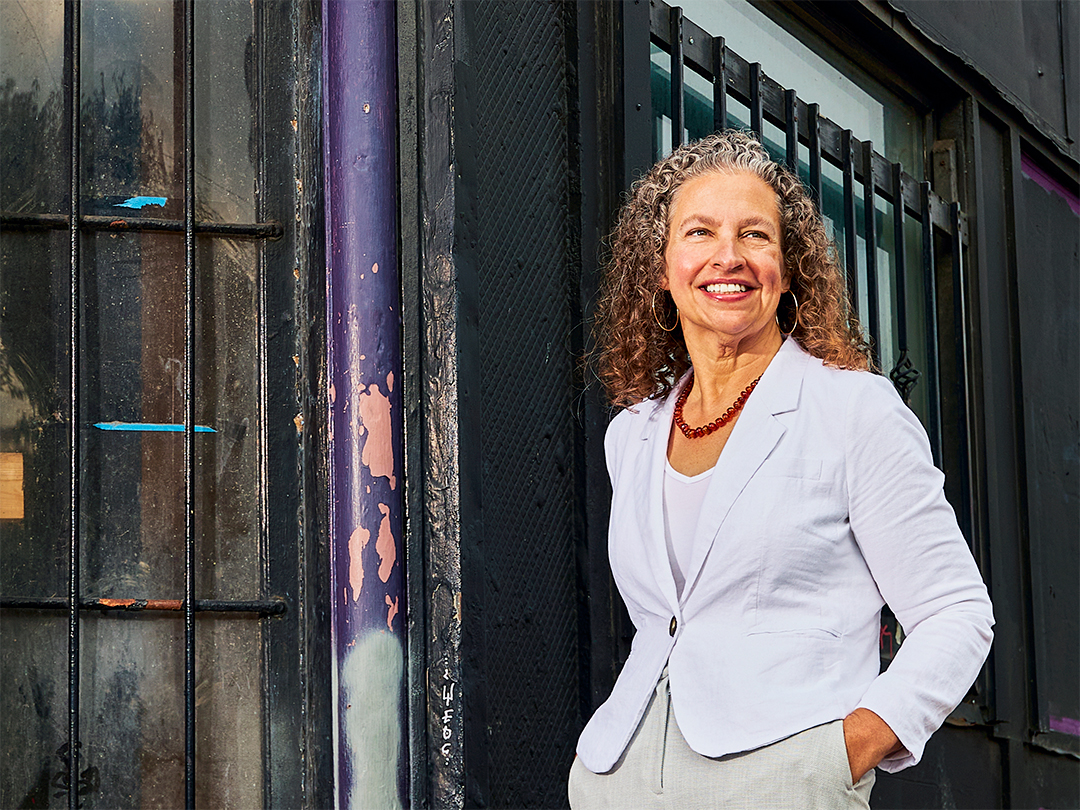
Ever wonder why some urban neighborhoods thrive while others languish? The answer often has to do with how involved and organized their residents are.
The neighborhoods were catalysts for a reborn business district in Walnut Hills, a community center in the heart of Westwood, new housing in Madisonville, and an arts district in East Price Hill. None of these projects came about through for-profit developers who suddenly discovered an interest in communities that had experienced decades of disinvestment. They happened because a group of neighbors found the vehicle for their energies and vision in kind of not-for-profit organization that draws its power from the people.
Community development corporations (CDCs) are resident-led organizations that use people power to shape the future of their neighborhoods. There are 36 of them in the city of Cincinnati, with more in Northern Kentucky and in suburban towns and cities. Some are dormant, some are waiting for a cause to ignite them, and others are following through on strategic plans.
“The best aspect of any community development corporation is that it’s born of and driven by residents who live there,” says Rosa Christophel, executive director of HomeBase Cincinnati. Her organization, formerly the Community Development Corporation Association of Greater Cincinnati, is a support group for CDCs, a resource, and a link to other resources.
CDCs grew out of the civil rights movement of the 1960s, largely as a response to neighborhoods getting plowed under by urban renewal programs and highways. The first one was formed in Brooklyn’s Bedford-Stuyvesant neighborhood, where housing had deteriorated and violence threatened residents. Anti-poverty programs initiated in the Kennedy and Johnson administrations provided funding and support for similar efforts around the country. “It was truly a grassroots effort,” says Christophel. “People asked themselves, How do we come together and from grassroots origins fight back against disinvestment and racial discrimination?”
In Cincinnati, the first neighborhood development corporation was started in 1968, the Mt. Auburn Good Housing Foundation. Walnut Hills, Avondale, Bond Hill, and Paddock Hills got organized by the mid-1970s. Today, organizations like The Center for Great Neighborhoods in Covington have served as center of gravity for city residents. “Our mission is to work alongside the residents of Covington to improve their lives as they improve their community,” says Executive Director Shannon Ratterman.
In South Cumminsville and surrounding neighborhoods in the Beekman Street corridor, Working in Neighborhoods, led by Sister Barbara Busch, has promoted home ownership and provided financial education since 1978. Its work includes building nearly 200 homes for low- to moderate-income residents. On the west side, Westwood Works took the lead on reimagining an old town hall into a center for events and community gatherings. It’s now turned its energies to the old Westwood Theatre to find new life for that neighborhood landmark.
Elsewhere, Price Hill Will turned a block of Warsaw Avenue into the Warsaw Avenue Creative Campus and redeveloped a vacant 100-year-old Masonic lodge into a performance venue. 3CDC is a community development corporation with a mission to lead development downtown and in Over-the-Rhine. Mt. Airy CURE is figuring out what to do with that neighborhood’s iconic but deteriorating water towers.
Each CDC has its own vision, personality, and methods for getting there. Here are deeper dives into the mission, the work, and the people at four impactful organizations.
[Photograph of Rachel Hastings by Andrew Doench]
COLLEGE HILL
A neighborhood group of gardening enthusiasts was the catalyst for change in College Hill, where the business district suffering long-term decline was shocked when two anchors—a Kroger store and a longtime family-owned restaurant, Shuller’s Wigwam—closed around 2000. The neighborhood activists faced a choice: Either fight back and work to rebuild the business district or accept its impending demise. They fought back.
Through the College Hill Community Urban Redevelopment Corp. (CHCURC), the neighborhood got a grant from the city and used it to buy vacant properties and hold them for the right opportunity. Affordable housing was built in the heart of the Hamilton Avenue district, followed by market rate apartments and condos. A brewpub opened up, then a pizza place, a Japanese restaurant, and a Mexican eatery.
The neighbors raised money through dinner parties, a 5K race, and other fundraisers. Just in the last seven years, the residents have donated $5 million to the cause, says Executive Director Emmanuel Karikari. That money is used to leverage grants from the city and other organizations and, as a result, the business district was not only saved but re-energized.
In the last few years, though, with inflation pressures mounting, some of the new businesses closed, including a couple of high-profile restaurants. That’s caused a shift in priorities. “How do we stabilize this business district so we don’t continue that trend of small businesses leaving the community or closing?” asks Karikari. “How do we continue to drive foot traffic at a time when families are spending less economically?”
CHCURC’s answer is to build more housing and bring more residents to the neighborhood. To that end, the organization bought the College Hill Plaza strip center with loans from Local Initiatives Support Corp., the city, and others. The 35-year-old center is past its prime and had become a magnet for crime.
The CDC stabilized the property and did some cosmetic work to make it more attractive in the short-term. Long-term, its days are numbered. “We have a vision for what that site will look like within the next five years, and that’s 250 mixed-income housing units,” Karikari says. “We need to be able to bring housing right on top of businesses, and the Plaza presents a tremendous opportunity to do that.”
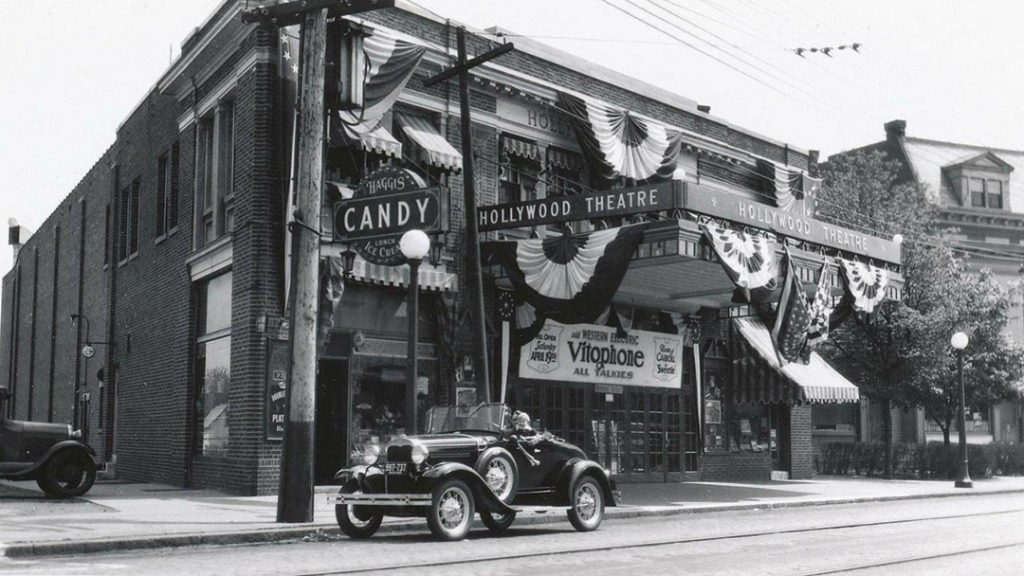
CHCURC has also acquired the old Hollywood Theatre on Hamilton Avenue and shored it up with a new roof, tuckpointing, and refurbished windows. It’s looking for an operator to program events. “Our overall goal is to turn that into a cultural arts center where we can hold a multitude of events that can drive economic impact within the business district,” says Karikari.
As the plan evolves, it will be overseen by the community, including a board that’s composed mostly of people who live, work, or own a business in the neighborhood. “We’re governed by the community,” he says. “So the community actually gets to dictate what development looks like in College Hill.”
NORTHSIDE
The gateway to the Cincinnati neighborhood of Northside is an intersection of five streets known as Knowlton’s Corner. On one corner sits a gas station; another is vacant after a White Castle that served up sliders for 60 years was torn down; on another is an old, empty commercial building and warehouse; while on another is an ancient wood frame building that’s defied renovation efforts. It’s not exactly the most welcoming gateway to one of Cincinnati’s most diverse and eclectic neighborhoods. But check back, because that intersection is changing.
The Northside Gateway is being recreated mainly due to the efforts of its community development corporation, Northsiders Engaged in Sustainable Transformation (NEST), which acquired an empty four-story, 19,000-square-foot former costume store and warehouse with plans to transform it into first-floor commercial space and 15 apartments upstairs. Behind it, NEST plans to build 45 apartments, for a total of 60 new units.
NEST bought the old White Castle property, and long-term plans call for more apartments and retail. The long-vacant wood-frame building, one of the oldest existing in the city, survived two floods over the years and is now being renovated into affordable apartments and a small commercial space.
This gateway to Northside is too important to be left to the profit-driven goals of private developers. There won’t be another gas station or fast-food purveyor there. Instead, its redevelopment will be driven by the neighborhood’s priorities of housing and small businesses. “Knowlton’s Corner is so important to the neighborhood that we couldn’t let an outside interest turn it into something else,” says NEST Executive Director Rachel Hastings.
A couple of blocks up from that corner sits the Park Theatre, another major NEST project. Built in 1913, it served as a movie theater screening X-rated films as well as art house obscurities, a commissary for a local bakery company, a second-hand furniture store, and a used appliance warehouse. NEST bought it and is controlling its future, which will likely be as a performing arts space.
“Everything that NEST does is by and for and of Northside,” says Hastings, who typifies an essential element of a successful CDC: committed, active leadership. She and her staff of one navigate real estate development, fund-raising, grant applications, and City Hall bureaucracy while organizing events and happy hours to keep the community engaged.
Hastings cut her teeth on community development as a college student in the 1990s volunteering for ReSTOC, the low-income housing group founded by Buddy Gray. His confrontational style didn’t sit well with the young Miami University student from the Chicago suburbs, who decided there had to be a better way. “I wanted to do community development and affordable housing, but I didn’t want to be fighting people all the time,” she says.
Hastings met the head of the Covington Community Center, precursor of The Center for Great Neighborhoods, and worked there for 22 years, rising to the role of executive director. “I found out there are so many people doing it in a much more collaborative approach,” she says.
That led to leadership at Price Hill Will and then NEST in Northside, where she and her family have lived for more than 20 years. “One of the things I love about Northside is that we’re still a neighborhood that wants more affordable housing and that sees the value of having a truly diverse population of folks from different income levels and different walks of life,” she says.
COVINGTON
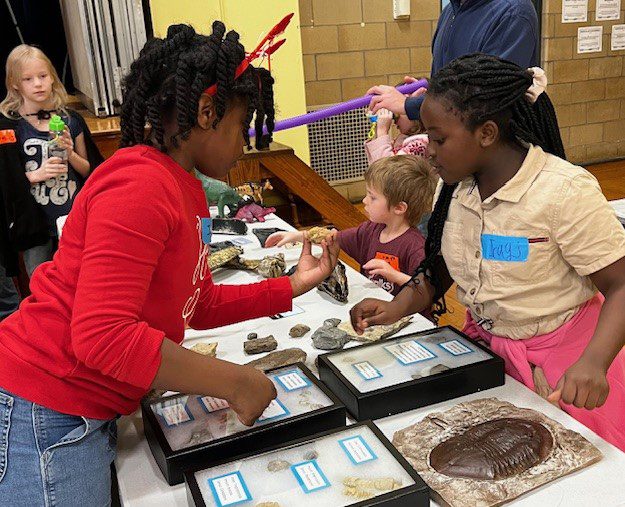
This city of 40,000-plus is home to 19 distinct neighborhoods. Bringing them together is The Center for Great Neighborhoods, which dates back to the 1960s and two small neighborhood efforts founded by local churches. Those efforts served the emergency needs of low-income residents. And while the Center and its priorities have evolved with the times, it remains focused on Covington residents.
“We try to just be available to the needs of Covington residents and be responsive,” says Ratterman, its executive director. That could mean starting and leading a program, partnering with another organization on an event or an initiative, or lending support to another neighborhood association or resident group in the city.
These days, a top priority is affordable housing. Ratterman and the Center have been at the table advocating and helping to shape policy as Northern Kentucky leaders work through a strategy to fill the gap in housing that working people can afford.
For many years, the Center was in the business of buying vacant, blighted properties, rehabbing them and selling them to low- and moderate-income buyers. “That was responsive to the needs of the neighborhoods that we were working in,” Ratterman says.
There was a concentration of vacant houses in some neighborhoods, and buyers were avoiding those neighborhoods. The Center helped to create a market in some of them and is responsible for 70 units of housing and $14 million in real estate improvements in the city.
The housing market has shifted in recent years. Covington is in demand as a place to live, and there isn’t much of a need any longer for a not-for-profit to buy and rehab vacant houses. As the market changed, so did the Center’s focus. “We’re more focused on a rental housing strategy and how can we help preserve long-term affordability,” says Ratterman.
That means owning properties rather than selling them in order to preserve their affordability. The strategy includes an innovative plan to buy a property from Covington schools and create units dedicated to housing Covington Public Schools teachers. A starting teacher in the district makes about $50,000 a year, while the median cost of a home in the city is about $225,000, making affordable housing a priority for attracting new teachers.
The first property, on Pike Street, will be a permanent home for the Covington Farmer’s Market, which the Center has owned for three years. There are a dozen or so active neighborhood associations in Covington, and the Center is a resource for all of them, helping to navigate permits and paperwork, get programs off the ground, serve as an advocate at City Hall or other government agency, or act as a fiscal agent to help secure grants.
“Wherever there’s a few residents who are getting together around an idea or a project that they want to do in their neighborhood, everything from green space improvement to housing to traffic safety, we will work with them to either make a connection or find resources they might need,” says Ratterman. “It’s an important way for residents to have opportunities to feel connected and to get their voices heard.”
WALNUT HILLS
It wasn’t all that long ago that the Walnut Hills neighborhood was on life support, with empty storefronts throughout its business district and historic homes and commercial buildings rusting and crumbling. Today, Walnut Hills is a model of conscientious redevelopment—a place where trendy bars, restaurants, jazz, and coffee share the neighborhood with new affordable apartments and restored housing.
How did it happen? Some point to the opening 12 years ago of Fireside Pizza, with is wood-fired pies and craft beer in an old firehouse as a tipping point for the neighborhood’s rebirth. Others see the restoration of two-way traffic on the two main streets of its business district as the spark.
Long-time resident Kathryne Gardette says the spirit goes back much further. “The tenacity of the neighborhood was the tipping point,” she says.
Indeed, it was the Walnut Hills Area Council, the volunteer-run neighborhood group, that created the Walnut Hills Redevelopment Foundation nearly 50 years ago to push for quality affordable housing in the community. That’s still a priority, and the not-for-profit foundation is still guided by its residents.
“We want to make sure that folks in the neighborhood have the assets they need to ensure their quality of life,” says Mona Jenkins, president of the community council. Along with the Walnut Hills Business Group, the community council works with the Redevelopment Foundation to ensure that remarkable redevelopment in Walnut Hills is planned and completed with residents in mind, in a neighborhood where about 40 percent are considered to be living in poverty.
“Walnut Hills is a historically diverse neighborhood, a historically Black neighborhood,” says Jenkins. “As we go through changes, we’re adamant about preserving the cultural ecosystem that exists here.”
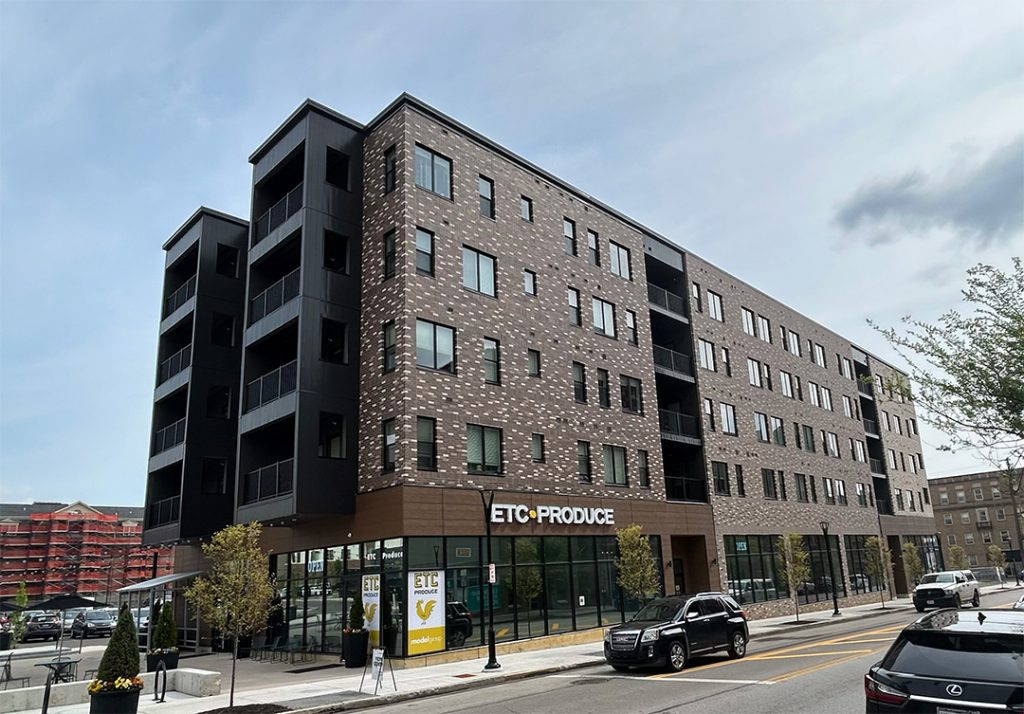
When the Walnut Hills Kroger store closed in 2017 after serving the neighborhood for more than 30 years, it left a three-acre sized vacancy in the center of the business district. That’s now being filled with a mix of new affordable apartments, market-rate housing, and retail. Peebles Apartments features one-, two- and three-bedroom units dedicated to low-income renters, while Paramount Launch is mixed-income housing with commercial space. For financing and development, these new projects were paired with the nearby Alexandra Apartments, where more than 80 units of affordable housing for seniors were restored.
Altogether the project is creating more than 180 units of housing, the majority of them considered affordable for working people. “We believe a quality place should be accessible to everyone,” says Redevelopment Foundation Executive Director Samantha Miller.
The organization purchased the Kroger building in order to control the site’s future. But the move was risky as they were unable to secure the surrounding land right away and had to pay tens of thousands in rent in order to maintain its control. “We completely decimated our reserves,” says Miller.
A successful community development corporation also needs productive partnerships with private developers. In Walnut Hills, Model Group was able to eventually gain secure the entire site and work with the not-for-profit to realize the neighborhood’s vision.
Miller, who’s led the foundation for nearly seven years, says she turned to community planning in college after getting disillusioned with studying engineering. “It wasn’t speaking to my passions,” she says, recalling that community planning did. “Why build a building when I can build a community?”