


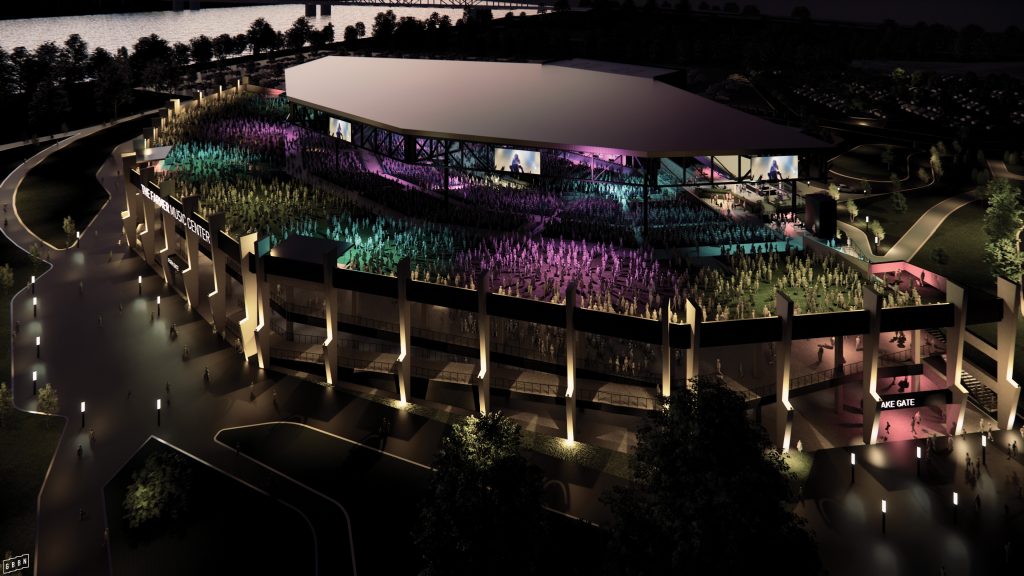
The stage has already been roughed out in rebar and 200 tons of concrete poured. As its columns rise above the Ohio River where a three-million-gallon recirculating pool once stood, the Farmer Music Center signals a new chapter in the evolution of Cincinnati’s dedication to melodies and harmonies and economic growth.
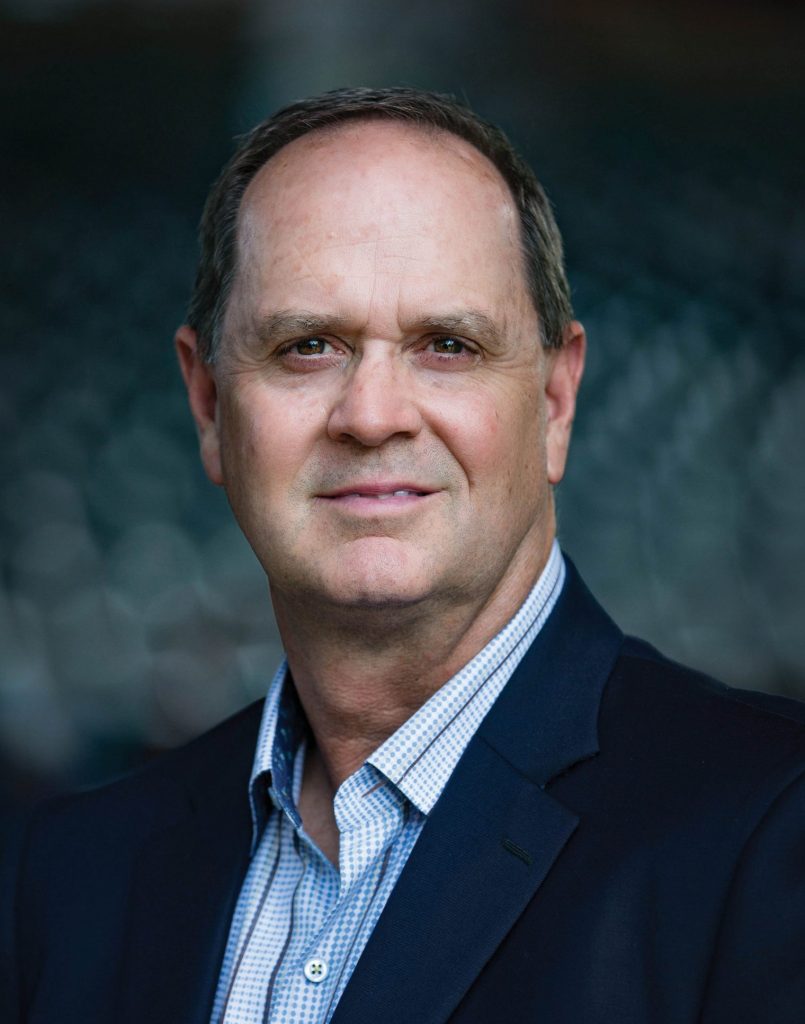
“We are routinely told by artists and their agents that Cincinnati is a place they want to play and, especially for a city our size, we’re one of the most competitive music markets in the country,” says Mike Smith, chief executive officer of Music and Event Management Inc. (MEMI), the region’s largest promoter of live entertainment.
A subsidiary of the Cincinnati Symphony Orchestra, MEMI manages concert facilities at the Riverbend Music Center, PNC Pavilion, Taft Theatre, and Brady Music Center here, as well as Rose Music Center in Huber Heights. But the Farmer Music Center will, when it opens a year from now, be the area’s crown jewel.
Smith promises a “unique and memorable customer experience” from the new $160-million venue, which will accommodate up to 8,000 in reserved seating and an additional 12,000 on the massive synthetic lawn. In addition to better sight lines and acoustics, Farmer will host several new restaurants and bars, private clubs, more and larger restrooms, and quick-serve concession stands.
“Customers have been around and seen other venues, and they demand more,” says Smith. So do the artists and agents, and already he’s seen a lot of interest in the project even before this summer’s concert tours come through town. He believes the new venue—being built adjacent to Riverbend and PNC Pavilion on the former Coney Island amusement park grounds—will attract the best touring talent, adding jobs and millions of dollars to the region’s economy.
There’s no doubt the music business is a solid contributor to the economy activity, says Pete Metz, vice president of civic strategy and policy for the Cincinnati Regional Chamber, who cites a 2024 study projecting an impact of as much as $2.7 billion. And that number does not include Farmer, which Smith expects will add an additional $100 million to the economy.
“It’s really clear that our cultural vibrancy is an asset to the region,” says Metz. “When we have a big event, the hotels are full and the restaurants are packed.” The vibe created by a big show like Taylor Swift, for example, brings in diverse audiences—including out-of-towners who come away with a positive experience and a new look at Cincinnati. “And we know that most people come to the city to visit before they decide to move here.”
[Photo collage by Stef Hadiwidjaja]
John Madden had been a big music fan for years, but the acts that were coming to town back in the mid-1990s didn’t really appeal to him. Metallica, Beastie Boys, and Lollapalooza just weren’t his thing. Even the more mellow tones of Phil Collins and Crosby, Stills & Nash didn’t cut it. Not even Ol’ Blue Eyes himself, Frank Sinatra, who performed at Riverbend on a hot September Saturday night.
Madden loved folk and blues music. Attending a Chris Smithers concert at Dayton’s Canal Street Tavern, he met the singer’s agent, who gave him his card and encouraged him to try his hand at promotion. He founded JBM Promotions and, at age 76, is still working his client list, but he says he’s no longer looking for new talent.
“I don’t think people realize how unique Cincinnati is in terms of the number of venues we have here,” he says, noting Cincinnati has more per capita than San Francisco. “I work with a lot of the smaller venues like Southgate House Revival that host niche acts, and they do that without the benefit of having a local radio station playing their music.”
Madden still mourns the loss of WNKU-FM, which catered to unique folk and blues artists. “That was a major blow, locally, to good indie music,” he says. “Commercial radio plays the Billboard 100 but not the kind of music you hear on the club scene.”
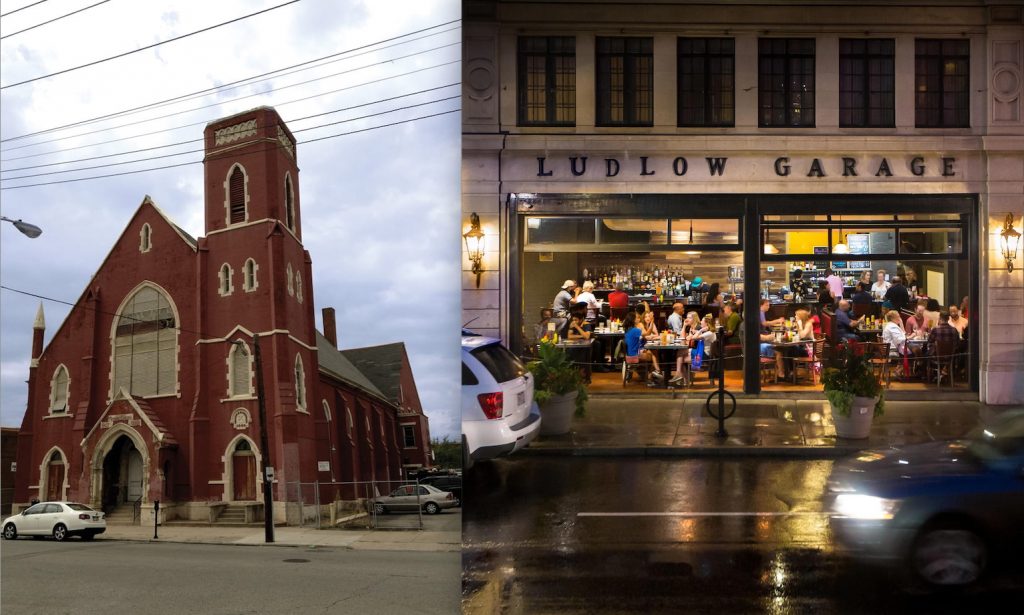
Still, he says with glee, there is a market in Cincinnati for indie music, as evidenced by crowds drawn to venues like Clifton’s Ludlow Garage, Mt. Lookout’s Redmoor Event House, Newport’s Southgate House Revival, Covington’s Madison Theater, and Memorial Hall, Woodward Theater, and MOTR Pub in Over-the-Rhine.
What’s really changed in the music business, says Madden, is consolidation of the major national agencies, many of which gobbled up smaller competitors along the way and focused on the lucrative festival season. Those shows, typically running from May through September, pack the largest venues but also have made inroads into the mid-level arenas where indie acts used to have a better shot of gaining exposure.
Madden calls these mega-promoters, such as Live Nation or AEG, “musical travel agents” who plan the routes for major touring groups, line up the venues, and take care of details such as housing, transportation, ticketing, promotion, and who gets paid, when, and how much. “Used to be that I’d line up an act with a three-page contract,” Madden recalls. “But with the consolidation of these agencies, now you get a 25-page contract from an artist and you need a lawyer to check the small print with a fine-tooth comb.”
The promoter’s life is a little easier in the smaller venues, and Cincinnati’s abundance of these smaller venues makes our market attractive to up-and-coming artists. The key to commercial success, Madden says, is finding your niche and building on it by booking acts you love and marketing your lineup effectively. Ludlow Garage, for instance, knows its audience is older and so you’ll see artists that match up. Judy Collins was there in November, and the schedule this year boasts tribute bands to Phil Collins, Ricky Nelson, and Pink Floyd. Patrons sit in comfortable highback seats, many sipping mixed drinks.
Just a mile and half away, no one sits and you’re more likely to order a craft IPA than a gin and tonic. Bogart’s skews to a younger college crowd, with Gen Z patrons standing shoulder-to-shoulder while high-energy rock groups like Teenage Bottlerocket or Violent Vira prowl the stage.
Southgate House Revival tries to hit all the notes with multiple stages. You might have a bluegrass band strumming banjos on the first floor, punk rockers on the second, and a solo country artist performing on the third. Located in a renovated 160-year-old Newport church, the venue recently partnered with Northern Kentucky University to host a series of performances by their jazz orchestra. They also brought in Florence’s School of Rock in February for the school’s Winter Showcase.
“The community connection is important to us, and our community seems to support a wide variety of music,” says Morrella Raleigh, owner and president of Southgate House Revival. Live music is in her blood. Her father, Ross, founded and ran the original Southgate House for decades, and Morrella was around for every note. When she returned from college, she jumped into the local music business, working at almost every entertainment venue in town in ticketing, logistics, marketing and public relations. That experience, she says, prepared her for fall 2012, when Southgate Revival House opened its doors.
Eclectic music choices, she says, work for her primarily because of the building’s size and design. But, she’s quick to say, it wouldn’t work as well without the exciting musical talent available locally. This town, she says, is blessed with great musicians playing a variety of genres and—especially for artists early in their careers—the smaller venues provide a perfect showcase. Southgate can accommodate 600 in the Sanctuary Room while in the more intimate Revival Room, with tables and chairs, a concert can be set for as few as 30.
Tastes change, Raleigh says, and venues need to keep abreast of what’s hot today and what might be hot next year. She cites the re-emergence of the protest song, a byproduct of today’s dizzying news cycle. A relic of the 1960s, artists like Taylor Swift, Bruce Springsteen, Bad Bunny, and Zach Bryan have sparked controversy with biting lyrics in new songs, a trend that’s filtered down into the local music community as well.
“They may not be household names, but they produce good music and they’re culturally relevant,” Raleigh says of up-and-coming Cincinnati musicians. “We are blessed to have a lot of really good venues where they can play.”
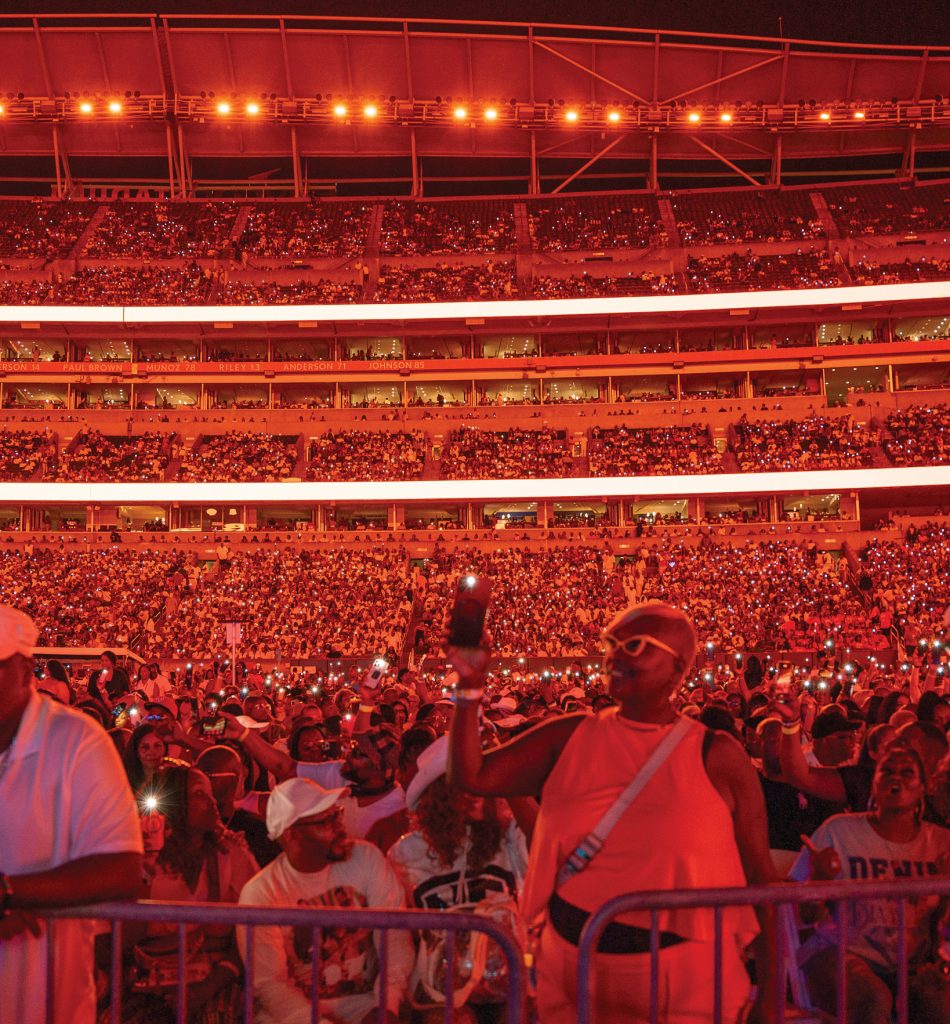
A vibrant club music scene in a metropolitan area the size of Cincinnati is good for everyone, attracting a broad group of artists who are aware there’s not just a market for their talent but also a healthy choice of stages they can play. Many of those venues also help prime a neighborhood’s economic engine.
The Redmoor has its own restaurant, for example, but Madden says three Asian restaurants a short walk away on Delta Avenue appreciate patronage from concert-goers. The same energy is present on Ludlow Avenue in Clifton before and after Ludlow Garage shows, both in the Garage’s own restaurant and in neighboring eateries and coffeeshops. Unlike large arenas that may have just a few shows per month, the stages at most smaller venues are active every weekend and sometimes on a weeknight, providing the business district with steady business.
But it’s the big blockbuster shows that mark our warm summer nights. This season, Rod Stewart, The Black Crowes, Tim McGraw, Train, and Hilary Duff are among the artists packing Riverbend’s schedule. MegaCorp Pavilion, with both indoor and outdoor stages, counters with The Black Keys, Courtney Barnett, and a joint concert featuring Spoon and The Beths.
Journey, Eric Clapton, and Barry Manilow are set to play Heritage Bank Arena. Trombone Shorty and Vince Gill will grace the Taft Theatre stage, while you’ll find acts like Sting, O.A.R., and Hot Mulligan performing at the Brady Music Center. At Great American Ball Park, Noah Kahan’s June concert is already a tough ticket. The Reds also have scheduled post-game concerts featuring artists such as Ludacris, country star Jon Pardi, and EDM maestro Marshmello.
Chris Stapleton will perform at Paycor Stadium, which also hosts the annual Cincinnati Music Festival in July, this year featuring Mary K. Blige, Charlie Wilson, and Trey Songz. The two-day festival is projected to bring nearly 100,000 fans to the home of the Bengals with a projected regional economic impact of about $110 million.
“You’re blessed with a lot of great large venues, especially for a city your size,” notes Dave Brooks, who writes for Puck Media and The Los Angeles Times, hosts a music podcast, and is a frequent guest on National Public Radio. Those large venues are attractive to touring artists, he says, and when you have more than one large venue seating thousands the competition can be fierce.
“It’s all about the money, because it’s a business after all,” Brooks says. It’s also a science. A band decides to tour for a variety of reasons—perhaps to promote a new album, to reconnect with their fans, or to experiment with a new sound. Maybe it’s simply to make money. Whatever the reason, he says, superstar bands and solo artists don’t schedule a city by chance.
Brooks says promoters spend millions of dollars in data collection to help them decide where to play and when. Spotify downloads, YouTube views, social media posts, previous ticket sales, regional population density, demographic analysis, travel time, and venue availability all contribute to the recipe of a successful summer tour. Sometimes the artist is recruited as an anchor for a major event—think Blige for the Cincinnati Music Festival—but typically they either hire their own promoters or use big national companies like Live Nation/Ticketmaster to take care of the details.
“And I mean everything from ticketing, promotion, advertising, and the logistics of moving maybe 12 truckloads of sound equipment from place to place,” says Brooks. Often there are two advance teams—one handling the concert taking place that day, the other setting up for the next night in a city hundreds of miles away.
It’s a costly enterprise that impacts ticket prices, which, especially since the pandemic ended, have soared well beyond the average inflation rate. Madden calls concert pricing “ridiculous” and blames ticket agencies that have used their industry’s consolidation to demand greater returns. Raleigh agrees, calling out behemoths like Live Nation/Ticketmaster for disrupting the market and “making it their goal to put the small folks out of business.”
Brooks notes these agencies had been grumbling for years about the lucrative independent secondary market (aka “scalpers”), whose entrepreneurs would patrol the streets with a fistful of tickets and walk away with a bigger fistful of dollars. “They saw people would pay more than face value and got tired of leaving money on the table,” he says.
The ticket agencies jumped into the secondary market, and many venues today use them as their frontline ticketer. In fact, Live Nation/Ticketmaster itself owns more than 400 concert venues, including the Blossom Music Center in Cuyahoga Falls. AEG, Live Nation’s chief competitor, owns more than 150 venues and operates many others, including MegaCorp Pavilion in Newport. You go through them, or you don’t go to the show.
“The concert ticket industry today is broken and, in fact, the concert industry itself is broken,” argued Department of Justice attorney David Dahlquist in February at a trial charging Live Nation/Ticketmaster had violated antitrust laws and used its monopoly status to overcharge captive customers. The trial was short-lived, as the federal government and Live Nation/Ticketmaster settled the case. But Ohio Attorney General David Yost blasted the settlement as “a terrible deal” for consumers, and he vowed to continue the fight along with more than two dozen other state attorneys general.
Raleigh is rooting for more sanity in the concert ticket market, lamenting that “going to a concert now feels more like an investment.” Over time, she worries, exorbitant ticket prices may chill the fervor for live entertainment, especially among younger, less affluent customers. Brooks agrees but then wonders how much the grumbling matters. “You’d be surprised what people will pay,” he says. “Kids who you wouldn’t think would have a lot of money somehow find a way to get in the door.”
Cincinnati’s future concert industry may well depend on new venues that will be available in the years to come, including Farmer Music Center. Will Heritage Bank Arena be expanded or replaced? Will FC Cincinnati’s planned multi-use development north of TQL Stadium include a concert facility? If so, how large?
Metz says the Chamber has noted that a number of high-profile touring acts have bypassed Cincinnati over the years, favoring larger modern concert facilities in Columbus, Indianapolis, Pittsburgh, Cleveland, and Louisville. The Chamber commissioned a study in 2024 that showed Cincinnati has averaged 18 major concerts a year since 2018 versus 24 for our regional peers. The lack of a modern, technologically-updated downtown arena is a major reason why—and civic leaders, Metz says, are focused on creating what he calls “a new live event hub.”
“But the reality is we have to figure out where we would put it and how we’d pay for it,” he says. There is no timetable and no single “arena czar” in charge, but Metz says city, county, and business leaders are all supportive and the Chamber “puts this issue at the forefront of every conversation we have.”
Can a city our size support a new outdoor concert venue at Riverbend, a new or expanded 20,000-seat downtown arena, and a new concert venue at TQL Stadium as well as dozens of incumbents ranging from Brady Music Center and Memorial Hall to Southgate House Revival and MOTR Pub?
MEMI’s market analysis shows the region has a healthy mix of large venues and intimate settings, but keeping that diversity is key. “If you have too many of the same size, all you end up doing is cannibalizing one another,” says Smith. “That may work in L.A. or Chicago, but there’s no point of duplicating the venues we already have here.”
Brooks, who considers the question from the artists’ point of view, counters that the market will decide. “But from my perspective, it ’s not possible to have too many venues.”