


Cincinnati is an economic powerhouse, home to Procter & Gamble, Kroger, GE Aviation, Children’s Hospital, Fifth Third Bank, University of Cincinnati, and other large employers. The region markets itself as a hub of industry and opportunity. And yet daily life here can be complicated. According to the most recent U.S. Census data, about one in four Cincinnati residents lives below the poverty line. The cost of living in the Cincinnati region runs about 3 percent below the national average, but the MIT Living Wage Calculator puts the living wage for a single adult with no children at $20.77 per hour.
The affordability advantage is shrinking, impacting families whose wages can’t keep pace with basic needs. The reality is the job someone holds, and keeps, is one of the greatest determinants of whether they escape poverty—and that reality lives at the very core of Cincinnati Works.
In 1996, Dave and Liane Phillips researched organizations across the country that addressed poverty through employment. They found that the most successful ones focused beyond just supporting people get a job—they also supported retention and advancement. They then built a model centered on one-on-one coaching, and Cincinnati Works was born.
Thirty years later, clients are considered members and employers partner with the organization to provide quality jobs and support longterm retention. Cincinnati Works staff help members identify goals to support their job search and follow their journey beyond the job offer. Partner employers provide coaching services to employees to help individuals grow and stay with the company and achieve their goals.
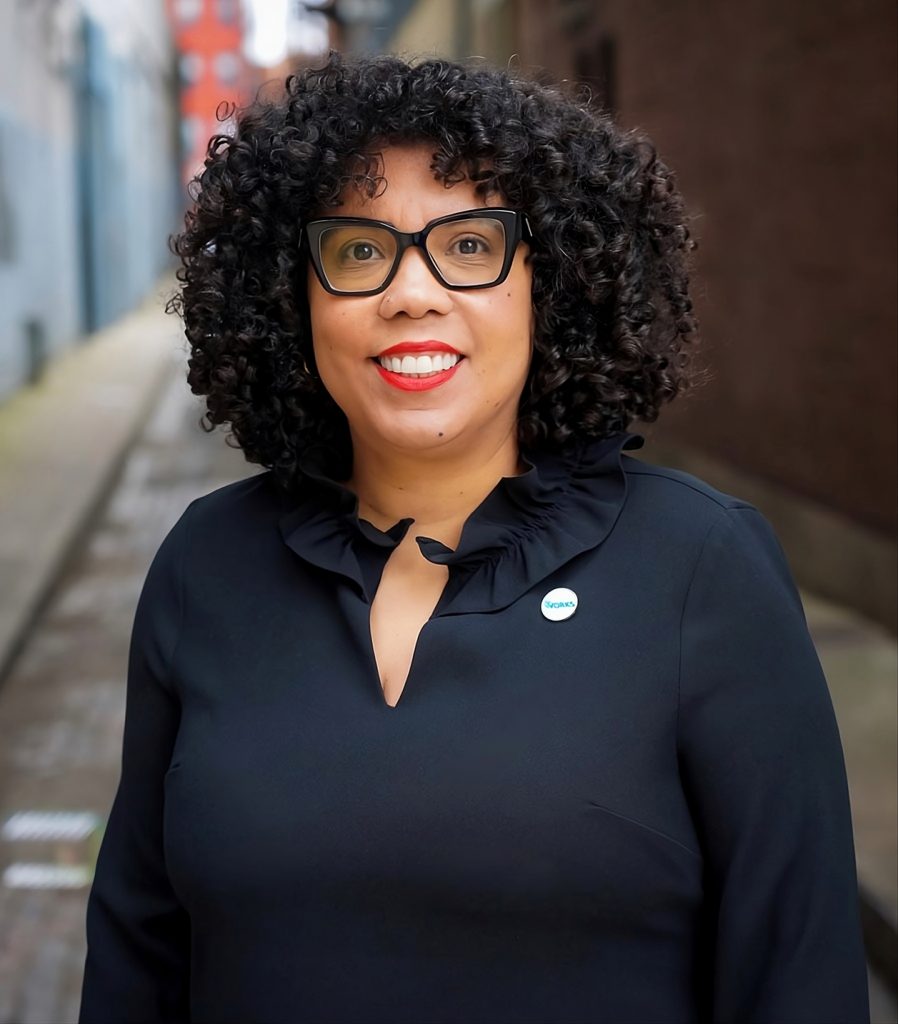
According to the organization’s newly released 2025 Economic Impact Report, produced in partnership with the Cincinnati Regional Chamber, Cincinnati Works placed more than 600 individuals in jobs over the past three years, driving retention rates that consistently outpace industry averages. Those placements supported or created more than 1,300 jobs and generated nearly $11 million in local, state, and federal tax revenue, with an overall impact of $136 million in economic output. Behind every statistic, though, are real people and real stories, says President and CEO Tianay Amat. “The data tells us the scale of the impact, but the story reminds us why the work matters,” she says.
Amat tells the story of Audrey, who connected with Cincinnati Works while attending Gamble Montessori knowing she was interested in a healthcare career but not having a clear pathway to land a job in the field. Through personalized coaching, the team explored career options and helped Audrey build confidence and develop a plan for her future. She eventually landed a supply chain management role with Cincinnati Children’s and built a solid career foundation. “She now knows she has a community and a support system that truly cares about her future,” says Amat. “And that’s the essence of Cincinnati Works. We meet people where they are and walk alongside them as they build a future of stability and opportunity.”
People like Audrey prove community building is a critical component of reducing poverty in Cincinnati and strengthening the workforce, says Amat. “Meaningful change requires not only data but compassion, coming to the table without judgment, and having an open heart and a plan. Progress requires patience, persistence, and the belief in people’s potential.”
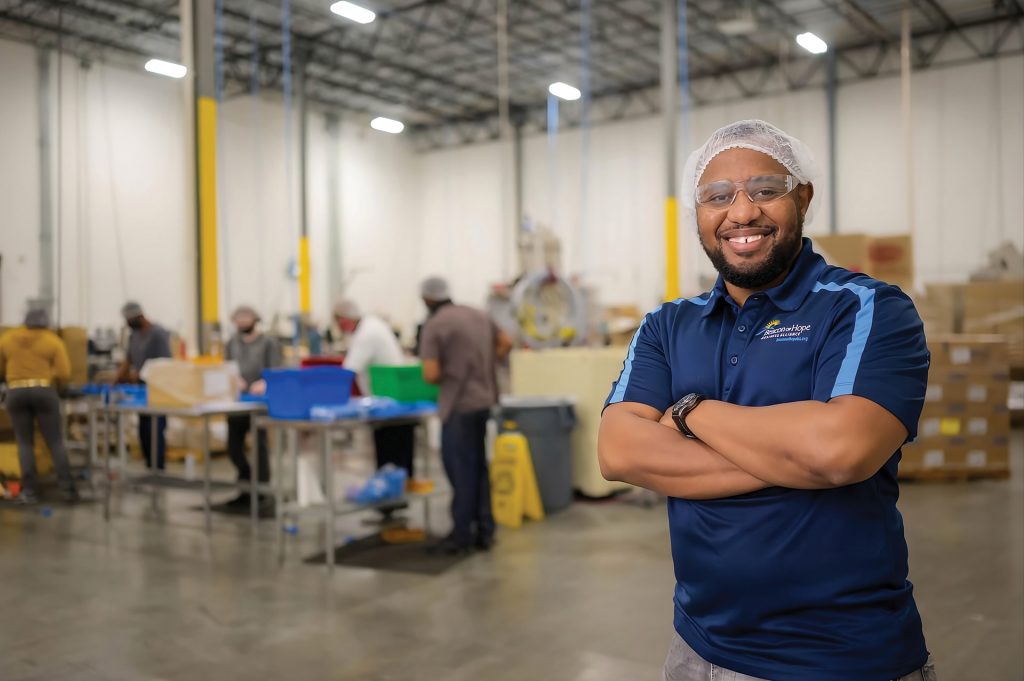
Walk into Cincinnati Works headquarters at 708 Walnut Street downtown, and you’ll find an unusual approach to nonprofit work. There’s no one-size-fits-all program or job board. Instead, each member is paired with a coach who sits down, listens, and helps build a plan together. “A potential member can walk in and say, Hey, I need a service,” says Amat. “We work with them and coach them up to get ready for opportunities.”
That one-on-one relationship is how the organization was founded in 1996, and today it remains the backbone of everything Cincinnati Works does. It’s different from the typical workforce approach, and it’s also supported by employers.
Through the Workforce Connection Program, launched in 2017, Cincinnati Works extends its coaching model directly into the workplace. Workforce coaches are embedded on-site at partner companies to provide guidance, support, and connections to resources that help employees stay on the job, build stability, and advance in their careers. Employers, in turn, benefit from improved retention, engagement, and overall productivity.
Interested companies initially engage with the program when they need talent or are struggling to retain existing employees. An employer might reach out looking to fill open positions or might need help building internal growth plans for leadership advancement. Cincinnati Works serves 1,592 members across its employer partner network, where coaches support the employee and also lead on-site workshops covering budgeting, stress management, and leadership development.
The on-site coaches aren’t there on behalf of the employer but serve as a confidential resource for employees, and personal information never makes its way back to management. A coach catches problems early—things like a transportation or health issue that might impact attendance or a housing crisis that might affect performance.
Amat says this arrangement is valuable to both the employer and the employee, especially in sensitive situations. Mental health concerns are something coaches hear quite often and something employees typically don’t share with their supervisor. That reality reflects Cincinnati Works’ understanding of the barriers standing between an individual and stable employment—and it’s rarely just job readiness.
From 2022 to 2025, Cincinnati Works completed more than 2,450 service plans with members, which are individualized roadmaps built around each person’s specific situation. The most common barriers addressed in service plans were financial instability, housing, and transportation. But the list also included legal barriers, education and skills gaps, childcare, healthcare coverage, and food security, all appearing in the plans Cincinnati Works coaches build alongside their members.
A member who can’t get to work because they don’t have reliable transportation or misses shifts because they can’t find affordable childcare are challenges that require someone who sees the full picture of a person’s life. Cincinnati Works connects members to a wide network of community partners that can fill the gaps the organization doesn’t cover directly—organizations like Freestore Foodbank, Legal Aid, City Gospel Mission, and Dress for Success. “Do what we do best and partner with the rest,” says Amat, emphasizing the importance of bringing in other organizations when necessary.
The proof that this approach works is in the numbers. Members who engaged with Cincinnati Works’ financial coaching program increased their net worth by an average of 12 percent. For Amat, moments like a member purchasing his or her first home or making their first 401k contribution indicates something bigger than financial progress. “It’s a great indicator that they’re thinking about the future,” she says, “and moving away from the day-to-day.”
When young people secure quality jobs that pay a living wage, offer benefits, and build skills, Amat says, they don’t just earn a paycheck—they launch a financial trajectory. That access is especially transformative for individuals experiencing poverty, which is why Cincinnati Works coaches visit area high schools to discuss the process of going straight into the workforce after graduation for those interested.
Too many students reach graduation without a clear path forward, says Amat, and the support they had in school disappears the moment after graduation. “We want to let them know that we have coaching here that can help you secure your dreams, help you think about your dreams, and map out a plan in Cincinnati where opportunity is accessible to everyone willing to work toward it.”
During the 2024–2025 school year, the Cincinnati Works’ Next Generation Program introduced the program to 505 students across Hamilton County and Campbell County schools, with 375 students engaging in the program and 53 students connecting with coaches after graduation.
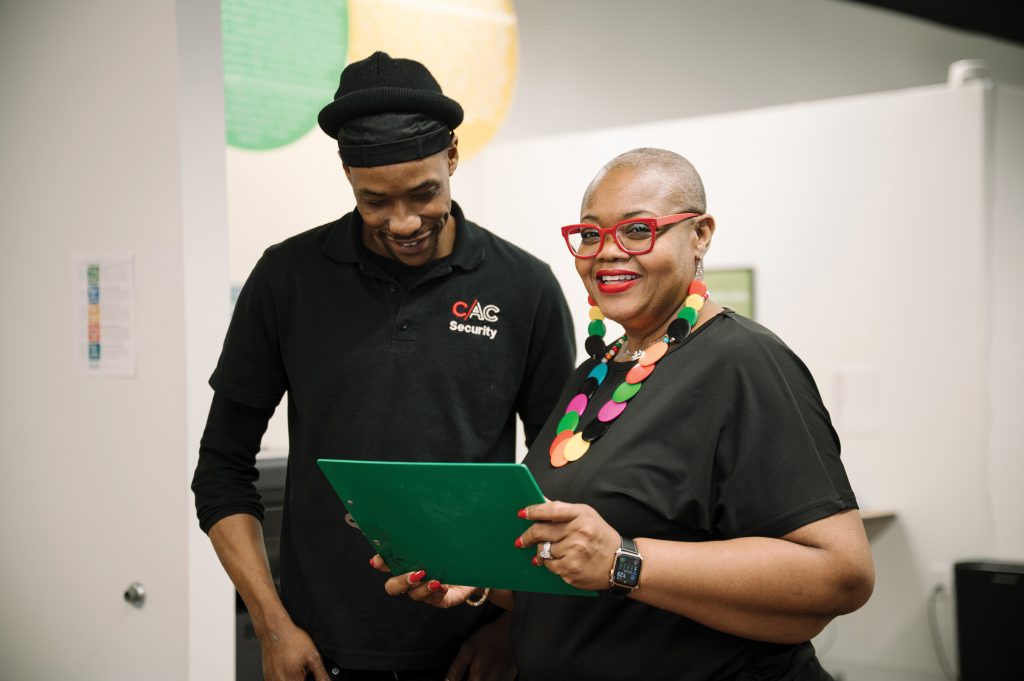
The best partnerships with outside vendors become part of company culture at Graeter’s Ice Cream and JTM Food Group, two area companies that have embraced their partnerships with Cincinnati Works. In fact, when the on-site Cincinnati Works coach at Graeter’s was briefly out recovering from an illness, “the entire team felt it,” says Vice President of Human Resources Alex Wilson. That kind of presence isn’t built overnight—it’s the result of building trust and a shared belief that everyone wins when employees are supported.
Graeter’s has partnered with Cincinnati Works for several years, specifically for coaching services. A coach is on site two days a week, and Wilson says they’ve become an extension of the company’s HR and management staff. “They empower our employees to be their best selves when they show up to work every day,” she says. “They’re able to support our teams in ways neither I nor other managers can, and that has allowed our team members to grow personally and professionally.”
The on-site coach is a trusted advisor to the Graeter’s leadership team and has created a space for employees that is free from judgment. That neutrality is why employers are attracted to the Cincinnati Works model, a safe space for both employers and employees. “In our first year of partnering with Cincinnati Works, we experienced a huge decrease in turnover,” says Wilson. “The partnership has been one of our most stable strategies and is still being used all these years later.”
Wilson says coaching has supported situations like helping team members achieve home ownership or simply getting team members on a personal budget. “They show up to our facility without passing any judgment on our employees,” she says. “They’re completely open and approachable and integrate themselves into our teams as a true support network. Our teams know they’re here to listen and to hold people accountable—to me that’s the program’s biggest strength.”
At JTM Food Group, the belief that team members are the company’s greatest asset isn’t just a line in a mission statement but the foundation of how the business operates. When the opportunity to partner with Cincinnati Works came up, the decision wasn’t difficult. “Partnering with an outside organization that aligns with our values only strengthens our onboarding process,” says Sonia Pereira, JTM’s human resources benefits manager. “It allows us to provide even more meaningful support to our new hires from day one.”
JTM is a compelling example of what a Cincinnati Works partnership looks like when there’s buy-in from day one. The Mason-based food manufacturer operates with a simple principle that they don’t just hire for a role but invest in the person. “As a family-owned company, our family extends to every team member who walks through our doors,” says Pereira. “Our partnership with Cincinnati Works reflects this identity, because they mirror our heart-centered culture.”
That shared mission helped create a straightforward partnership, with JTM utilizing both job placement services and on-site workforce coaching. Currently, a Cincinnati Works coach is on site one day a week at JTM’s facility, with the intention of ensuring they aren’t an outside vendor that just shows up once and leaves. Pereira says the coach is deeply integrated into company culture, meets with new hires, and gets to know the team as individuals. “The approach means that when a team member faces a challenge, they aren’t reaching out to a stranger but to a partner they already know and trust,” says Pereira.
Pereira says the coach acts as a trusted third party who can provide specialized resources and follow-through that the JTM team couldn’t manage on its own. Since partnering with Cincinnati Works, the company has seen measurable increases in retention and attendance, Pereira says. Employees who use coaching services stay at the company longer because they have the tools to navigate personal challenges. “We are so proud of our partnership with Cincinnati Works,” she says. “We’re making a commitment to walk alongside our team members and help them navigate whatever comes their way.”
For HR leaders who are skeptical that a nonprofit partnership can impact retention and turnover, Pereira says it starts with the proper approach. “The uncertainty usually comes from thinking a nonprofit is just an outside vendor,” she says. “But when you work alongside them, they become a retention resource. They provide the middle ground where employees can solve problems before those problems lead to poor work habits or even a resignation.”
Wilson’s advice to any organization considering a similar partnership is to go in with trust and be prepared to celebrate wins that don’t always show up on a balance sheet. “When we show up in our personal lives as our best selves, we show up in our professional lives as our best selves,” she says. “At Graeter’s, that philosophy isn’t just good HR strategy, it’s how we walk the walk.”